
AI answer files are machine-readable site resources that summarize supported information or point automated readers to the pages that contain it. The term can cover an optional llms.txt summary, clean text or Markdown versions of key material, and structured feeds built for a defined use. Treat them as indexes to accurate visible pages. A dedicated answer file is optional, and no single file guarantees inclusion in an AI answer.
"AI answer file" is a practical umbrella term with no universal web standard behind it. Several machine-readable surfaces help automated systems discover, label, or summarize site content, and each one has a different job.
The useful question is not which files exist. It is which surface your site can maintain accurately, because a stale one hurts you.
Separate discovery, access, labels, and summaries
A machine-readable search layer usually includes several parts:
- A sitemap lists canonical pages and files the site wants crawlers to find.
robots.txtrecords crawler access rules for parts of the site.- Canonical tags identify the preferred address for duplicate or similar pages.
- Structured data labels the entities and content already visible on a page.
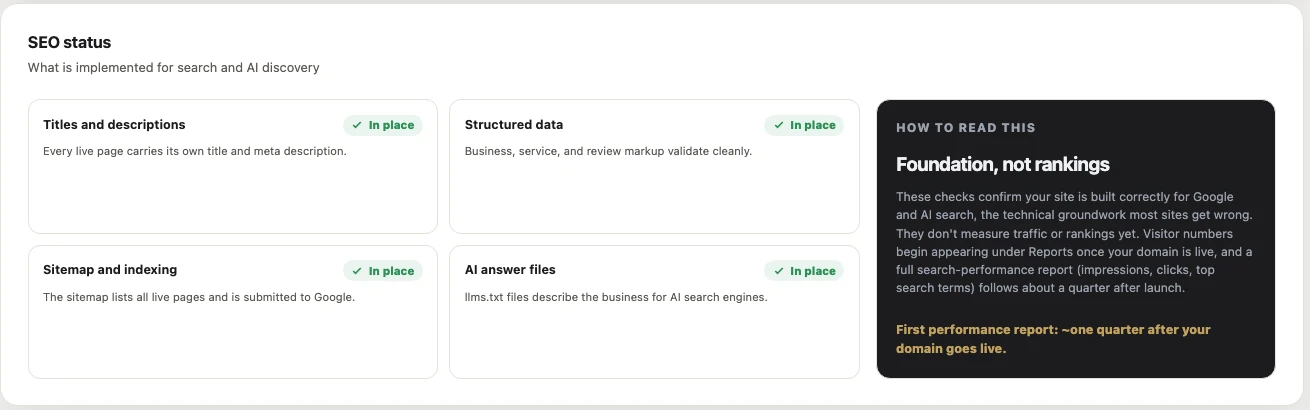
- An optional answer file summarizes the site and links to detailed sources.
These surfaces have to agree. The sitemap points to the canonical page. Structured data uses that same address. The answer file links to it and repeats only facts the visible page supports. One layer telling a different story from another is how a clean site turns into a confusing source.
What llms.txt means
llms.txt is a proposal for a Markdown file at a predictable address: a concise site description plus links to detailed material an automated reader may use at answer time.
Its status matters. It is still a proposal, and adoption varies. Publishing it creates no instruction any engine must read, trust, cite, or follow. Anyone selling llms.txt as an AI-ranking hack is selling you a text file.
Where it earns its keep: as a curated index. It helps most when the site has substantial documentation, several deep topic areas, or pages whose layout makes a clean content map genuinely useful.
Other answer surfaces
A site may publish clean text or Markdown versions of important pages. A documentation site may publish a structured content feed. A product or media site may expose a supported data feed for a defined reader. Structured data embedded in a page gives machines explicit labels for visible information.
Each surface needs a named purpose and a named owner. Extra files are maintenance debt, and an outdated summary that conflicts with the current page makes your whole site a weaker source.
For most business sites, visible HTML, accurate metadata, matching structured data, clear internal links, and a current sitemap carry the main work. An answer file makes that material easier to navigate. It cannot repair vague or unsupported pages, and it will not try.
Why automated readers use machine-readable surfaces
Machine-readable formats give automated readers predictable fields, addresses, relationships, and access signals. A sitemap makes priority URLs easier to discover. Structured data names a page's subject and related entities. A concise answer file points straight to detailed material without making a reader infer the whole site structure.
Each engine decides which surfaces it reads and how it uses them. Access, parsing, indexing, retrieval, quotation, and citation are all separate decisions, and eligibility guarantees none of them.
Visible page content stays central because it carries the complete source, context, and evidence behind the summary.
What belongs in an answer file
Start from the approved fact map and canonical page list. Include only information the business can support, and keep each statement consistent with the page it references.
A practical answer file can contain:
- The public business or site name
- A concise supported description
- The main topics, offers, or documentation areas
- A canonical link for each topic
- A short explanation of what each linked page answers
- Links to policies or terms that affect use of the material
- A revision date when the site can maintain it accurately
Plain language. Short enough to scan. Every entry links to the page that carries the full answer.
A simple shape could look like this:
# Business name

> A supported description that matches the visible site.

## Primary topics

- [Topic page](https://example.com/topic): The question this page answers.
- [Service page](https://example.com/service): The supported service facts on this page.

## Policies

- [Usage terms](https://example.com/terms): The current terms for using the site or material.
The published file replaces the example text with approved facts and real canonical addresses.
What should stay out
Keep these out of answer files:
- Claims absent from the visible site
- Unapproved statistics, outcomes, awards, reviews, or client names
- Keyword lists written without useful context
- Private documents or intake information
- Retired routes and temporary campaign links
- Conflicting versions of a business fact
- Instructions that claim authority over an engine's answer
An answer file that becomes a second website with a separate story has failed at its one job.
Does your website need one?
Every public site benefits from accessible visible pages, clear internal links, accurate metadata, appropriate structured data, crawler access decisions, and a current canonical page list. A dedicated answer file earns its place when it gives automated readers a maintained route through complex or extensive material.
Consider one when:
- The site has several important topic areas or documentation sets.
- Priority information sits inside complex page layouts.
- The business already maintains an approved fact map.
- The team can update the file whenever source pages change.
- The file can point to stable canonical evidence pages.
Skip it for now when the visible pages are incomplete, contradictory, inaccessible, or unsupported. Fix the pages first. Build the optional summary from the settled source.

Test and maintain the file
Fetch the file at its public address and confirm it returns readable text. Open every link. Compare each summary with the visible page, metadata, and structured data. Pull the stale routes and unsupported claims.
Add the answer file to the written implementation record: owner, source pages, revision date, review trigger. Recheck it after a service change, route move, site rebuild, or policy update.
Keyframe0's SEO and AI-search work covers visible answers, structured data, discovery files, metadata, internal links, and a written implementation record built from supported facts.
For a free written review of your current search and answer surfaces, send the site through Work with us.